Fast turnaround
Prototyping & Batch printing
Local Calgary 3D Printing & Canada-wide shipping
For Commercial & Custom Projects
Industrial-Grade Quality

Fast turnaround
Prototyping & Batch printing
Local Calgary 3D Printing & Canada-wide shipping
For Commercial & Custom Projects
Industrial-Grade Quality
We’ll analyze your geometry, suggest the optimal technology ( FDM, SLA, SLS or MJF), and provide an estimate along with our expected duration.
Final pricing depends on material volume, print time, and requested finishing services.
We manufacture your parts using industrial-grade materials.
After printing, we handle all necessary post-processing, including support removal, surface cleanup, and any requested assembly or laser engraving.
You will receive a notification once your finished parts are ready.
You can pick them up locally, or we can ship them directly to your facility.
Need a 3D model? Check out our Scan to CAD and 3D modelling services.

Jet Fusion (Multi Jet Fusion, MJF) 3D printing builds parts from polymer powder by jetting fusing and detailing agents onto each layer, then using infrared energy to melt and solidify the selected areas. It produces strong, accurate parts with fine detail and is well-suited for functional prototypes and low-to-mid volume production, typically with materials like PA12 nylon.
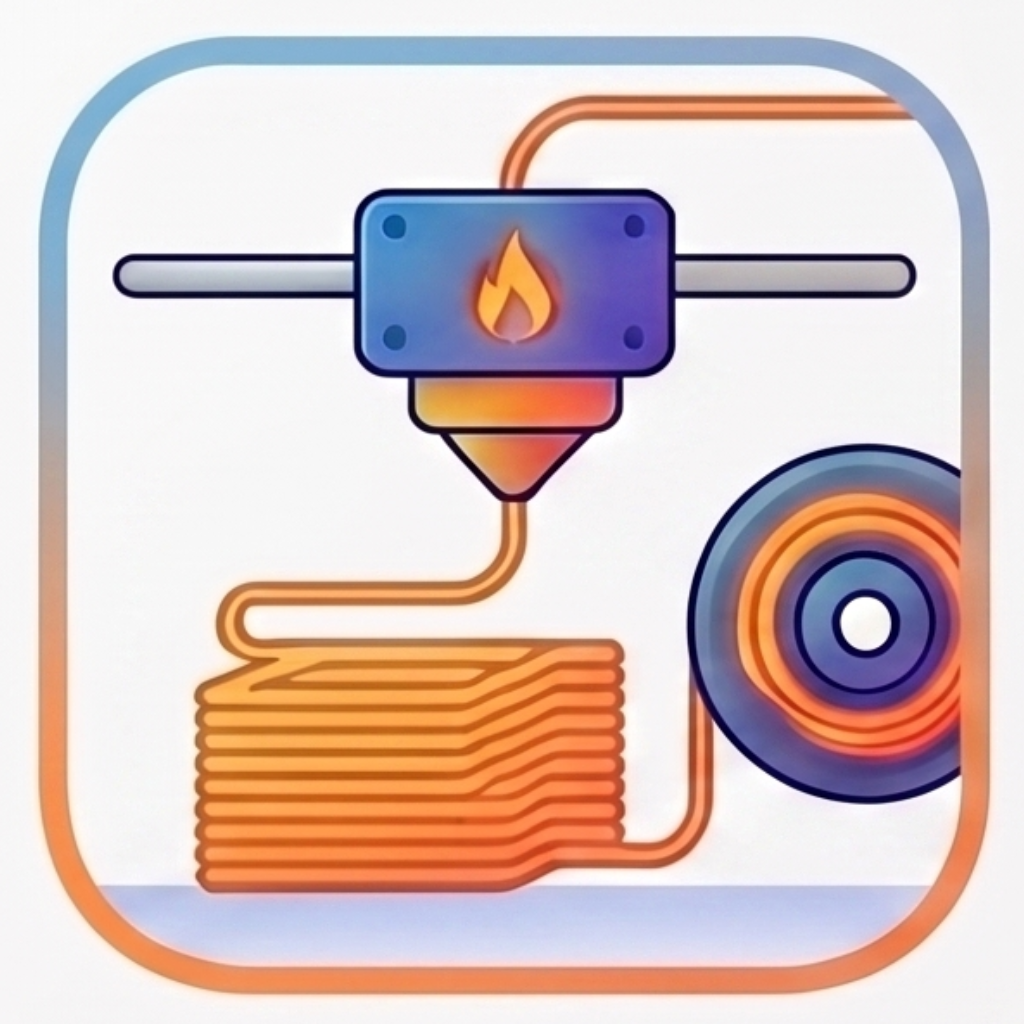
FDM (Fused Deposition Modeling) 3D printers build objects by melting a plastic filament and extruding it through a heated nozzle, laying material down layer by layer. They’re widely used because they’re affordable, versatile, and compatible with many common plastics like PLA, PETG, and ABS, among others.
Functional prototypes, jigs/fixtures, brackets, enclosures
Large parts at relatively low cost, quick iteration
“Good enough” aesthetics; strongest along the layer lines is the main limitation

SLA (Stereolithography) 3D printers create parts by curing liquid photopolymer resin with a UV laser or light source, solidifying it layer by layer. They’re known for very smooth surface finishes, fine details, and high accuracy, but usually require post-processing like washing and UV curing.
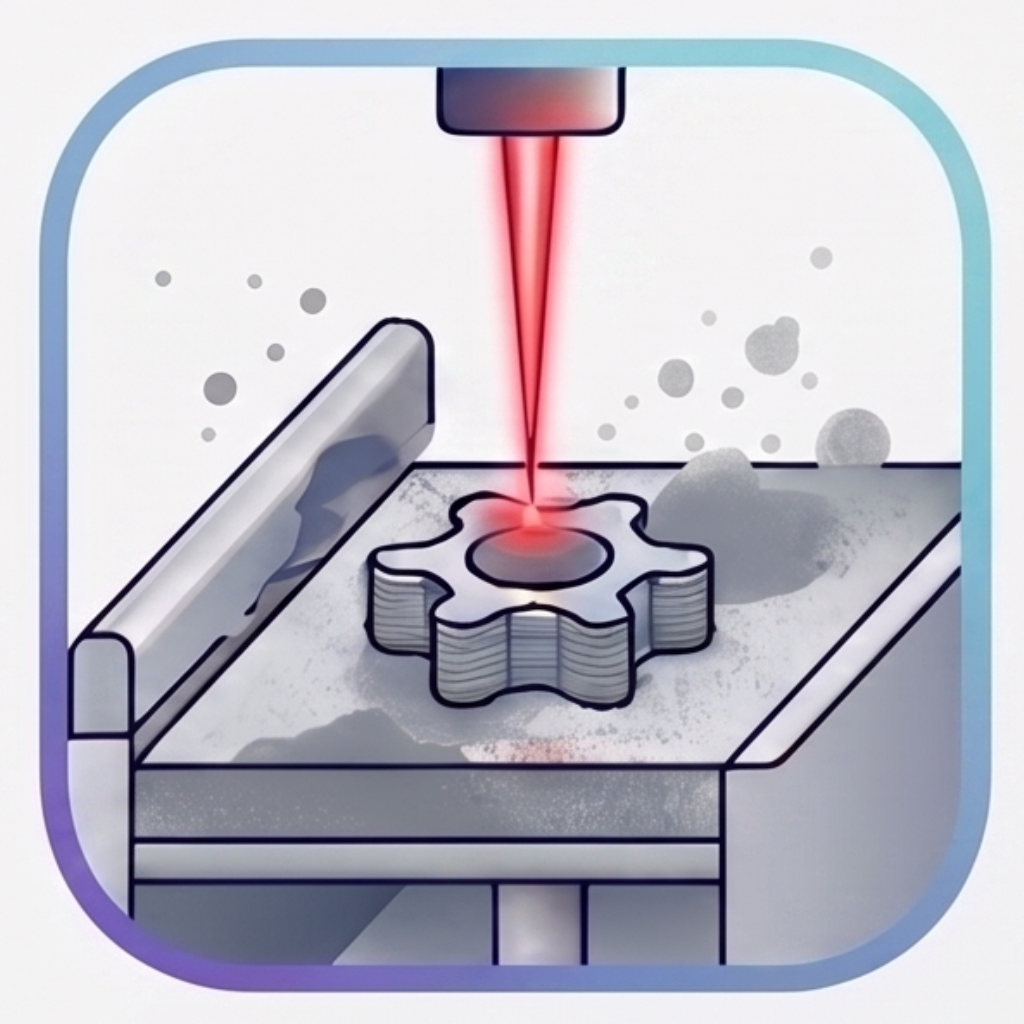
SLS (Selective Laser Sintering) 3D printers use a laser to fuse powdered material (often nylon) into solid parts, layer by layer. Because the surrounding powder supports the print, SLS can produce strong, complex geometries without support structures, though parts typically have a slightly grainy surface and require powder removal/finishing.
Durable end-use parts in nylon, complex geometries, snap-fits, living hinges
Production runs (low-to-mid volume), parts that need uniform strength and heat resistance
Best when you want “no supports” + strong functional parts
PHYSICAL PARTS
High-quality, functional physical parts manufactured to your exact specifications, ready for end-use or prototyping.
File preparation (slicing)
3D Printing
Support removal
Basic surface cleanup
Optional: Laser engraving & Assembly
Depends on current workload and print volume.
Standard orders are typically completed within 3–5 business days.
Complex engineering materials or bulk production runs may take longer.
We offer complete product solutions.
Beyond printing, we provide custom laser engraving for logos, part numbers, or technical markings, as well as full mechanical assembly for multi-component enclosures and devices.
To calculate the exact cost of manufacturing, we require a 3D model (such as a STEP or STL file). This allows us to accurately determine the precise material volume, structural infill, and machine time required.
If you do not have a 3D model yet, we can create one for you! Depending on your situation, we can:
Lorem ipsum dolor sit amet, consectetuer adipiscing elit, sed diam nonummy nibh euismod tincidunt ut laoreet dolore magna aliquam erat volutpat.
While our core specialty is functional, engineering-grade polymers and composites (such as ASA-CF, ABS-GF, PA6, PA12, and PETG reinforced with carbon or glass fiber), we also regularly print with standard materials. Depending on your project requirements, we can print using PLA, TPU (flexible, rubber-like material), and other standard filaments.
Depending on the application, yes. While polymers cannot replace high-load steel, our carbon fiber and glass fiber reinforced composites offer exceptional tensile strength, impact resistance, and chemical durability. They are regularly used by our clients to replace heavy aluminum components, custom automotive brackets, and industrial manufacturing jigs.
Yes. Instead of printing plastic threads (which can strip or wear out easily), we install heat-set brass inserts during the post-processing phase. This provides strong, durable, and reusable metal threads that behave exactly like traditional injection-molded or machined parts.
Our primary focus is delivering functional, engineering-grade parts with a natural, bare finish. While we do not offer automotive-grade painting or cosmetic finishing in-house, most of materials can easily be sanded, primed, and painted by your team or an auto body shop if a cosmetic finish is required.
While we do not have metal 3D printers or CNC mills in-house, we can fully manage and organize these services for you. We have established relationships with trusted manufacturing partners who provide us with excellent wholesale rates. This allows us to deliver high-quality CNC-machined components or 3D-printed metal parts directly from our reverse-engineered CAD models, offering you a seamless end-to-end solution.
Not always, and we will provide an honest engineering assessment before taking your money. For example, large composite panels meant for high-heat environments (like automotive engine bays) often warp or delaminate if 3D printed. Similarly, thin items requiring internal metal reinforcement (like eyeglass arms) will snap if printed in rigid plastic. When additive manufacturing isn’t feasible, we provide the precise CAD files so you can use injection molding or fiberglass/carbon fiber fabrication.
We apply a standard $60 + GST minimum flat rate for small-scale print jobs. This price includes the actual 3D printing of your part (provided it is relatively small), as well as all the essential engineering costs associated with file preparation (slicing), machine warm-up, calibration, and basic post-processing.
Depending on the size and geometry of the object, we may even be able to batch and print multiple small parts together under this single $60 flat rate.
Additionally, if 3D printing is just one phase of a larger end-to-end project (e.g., 3D scanning + reverse engineering + 3D printing), this minimum setup fee is completely waived.
We offer Net 15 payment terms for established corporate clients and research institutions. We accept Interac e-Transfers free of charge, as well as major credit cards (subject to a standard 3% processing fee).
Standard custom 3D printing jobs are typically completed within 2–4 business days, depending on the part size, chosen material, and our current production queue. Expedited rush printing is often available upon request for an additional rush fee.
While our engineering-grade carbon and glass fiber composites are exceptionally durable, they cannot replace metal in every scenario. We strongly advise against 3D printing components that will be subjected to extreme localized heat (such as engine exhaust manifolds or direct engine block mounts), critical high-stress load-bearing structures (like automotive suspension arms), or very thin, flexible parts that require internal metal reinforcement (like eyeglass frames). If your project requires these extreme properties, we will provide the precise CAD files so you can manufacture the part using CNC metal machining or traditional fiberglass/carbon fiber fabrication.


